
Particle Boards for Durable Building Solutions
Home » Particle Boards for Durable Building Solutions
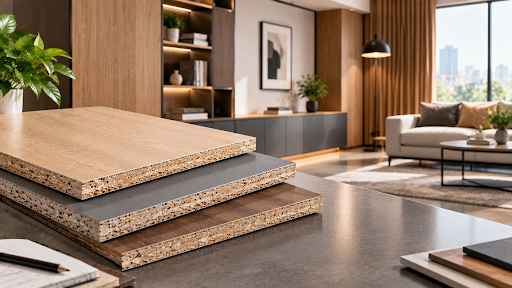
Look, we’ve been making particle boards in this city longer than most junior engineers in Hyderabad have been holding a tape measure. We started this journey back in ’92 with the Germans, and frankly, we didn’t think we’d still be having this conversation thirty-odd years later. But here we are. Why? Because builders in this town figured out pretty quickly that you can’t just throw any random board against Hyderabad’s weather and expect it to stay put.
We’re NCL Industries. Our Bison Panel is technically a cement-bonded particle board: 62% cement, 28% mineralised wood, and the rest water and binders. No asbestos. No formaldehyde. Just solid engineering. We manufacture it right down the road in Mattapalli, and we sell it through over 2,500 dealers across the country. But today, let’s talk about what this stuff actually does for your projects here in the city.
Particle Boards for Modern Construction Applications
You’re doing a commercial fit-out in Gachibowli, or maybe a row of villas in Narsingi. The client wants something that looks premium, doesn’t break the bank, and, most importantly, won’t start swelling up the moment the September rains hit. Traditional plywood? Too risky with termites. Gypsum? Great for dry areas, but useless near a kitchen or a bathroom.
That’s where our particle boards come into the picture.
We’ve supplied these boards for everything from the swanky new F&B outlets around Jubilee Hills to the interior fit-outs at the airport. Honestly, once you spec a Bison Panel, you stop worrying about callbacks. Here’s what it handles without breaking a sweat:
- False ceilings and drywall partitions go up fast and stay flat.
- Wall cladding and furniture can be cut, routed, and drilled just like wood, but it doesn’t chip.
- Flooring and mezzanine levels: this stuff has the load-bearing spine to handle heavy foot traffic.
- Prefab structures and exterior facades, yes, outside, in the open.
We’ve even seen clever interior designers use it for CNC-cut decorative screens in those high-end Banjara Hills penthouses. The point is, when you’re specifying particle boards for a modern site, you need something that adapts to the chaos of a construction schedule. You don’t want a material that requires special diamond-tipped blades just to cut a straight line. Bison Panel works with the tools your carpenters already have in their kit.
Why Particle Boards Are Used in Interior Projects
If you’re an architect in Hyderabad, you know the struggle. Clients want that seamless, modern look, but they also want it finished yesterday. And the site labour? They’re not exactly fond of fragile materials that crack under pressure.
Interior designers keep coming back to these particle boards because of three brutally practical reasons.
- The surface finish: Unlike those cheap fibre cement boards that feel like sandpaper, Bison Panel comes out of the press with a smooth, even face on both sides. That means your painter isn’t spending extra days applying layer after layer of putty to get a flat surface. You save on plastering labour, simple as that.
- Acoustics: We’ve done projects in those packed co-working spaces in HITEC City where the noise levels are maddening. Combine Bison Panel with some glass wool in the cavity, and suddenly the conference rooms are actually private.
- Termites: The old city areas and the newer plotted developments are infested with these little buggers. Because our boards are dominated by cement, termites take one bite and move on. We don’t need to treat this stuff with nasty chemicals. It just refuses to host them.
Cement Panel Board for Strength and Durability
Let’s get one thing absolutely clear. When we call Bison Panel a cement panel board, we aren’t playing marketing games. Cement isn’t just an ingredient in our mix. It’s the boss. It makes up the majority of this board, and that changes the entire equation for your structural integrity.
Hyderabad swings between oven-hot summers and those sticky, heavy monsoon spells. A typical MDF or plywood board expands and contracts so much that your joints start popping open within two seasons. This cement panel board doesn’t do that. The wood particles inside are fully mineralised, so they don’t absorb moisture the way raw wood fibres do.
So, what does this cement panel board mean for you practically?
It means that if you’re using it for flooring in a high-rise in Kukatpally, it holds up under heavy furniture without sagging. It means if you’re cladding an exterior wall facing the harsh sun, you won’t see those ugly hairline cracks after months.
We’ve tested this stuff to meet BIS Standard IS:14276. And beyond the paperwork, we’ve seen it survive on sites where other materials just gave up. Our clients Tata Projects, L&T, and Shapoorji aren’t buying this for the pretty packaging. They buy this cement panel board because they know the rework cost on a failed wall cladding is ten times the material cost. They’d rather spend a little more upfront and sleep peacefully at night.
Waterproofing Particle Board for Moisture-Prone Areas
Let’s talk about the elephant in the room: Hyderabad’s humidity. It’s not just the rain that messes with your materials; it’s the dampness that lingers in the air for weeks. If you’re doing a kitchen platform or a bathroom partition, you need a waterproofing particle board that genuinely seals out moisture.
I can’t tell you how many times we’ve walked into a site in Kondapur where the contractor used some random imported board, and it’s swollen up like a sponge near the sink. That doesn’t happen with ours.
This specific waterproofing particle board is engineered to resist water ingress. Because the cement matrix encapsulates the wood particles, there’s no path for moisture to travel deep into the core. Even if you leave it in a damp area, it won’t delaminate or grow that ugly black mould you see on cheap ply. We’ve used this waterproofing particle board in resort shower areas and outdoor roof overlay applications where it gets drenched regularly. It just shrugs it off.
If you’re building a villa with a basement gym or a home theatre space that tends to trap humidity, you’ll thank yourself for specifying a proper waterproofing particle board.
What Sets Our Manufacturing Apart? (And Why It Matters to You)
We could give you a fancy tour of our Mattapalli plant, but we’ll keep it simple. We make our own cement. We own the cement factory right next to the board plant. That vertical integration isn’t just corporate jargon. It means we control the purity of the primary ingredient from the moment the limestone is crushed.
While other manufacturers buy cement from third parties and hope for consistency, we know exactly what’s going into our mix. That’s why our boards don’t have the wild variations in density that you see in cheaper imports. Every batch of our particle boards is consistent. You order 10mm today, and a year later, you get the exact same 10mm. That predictability saves your carpenters from having to recalibrate their saws.
We’re Neighbours, Not Some Distant MNC?
One thing we have that our competitors absolutely cannot replicate. We are headquartered right here in Secunderabad. Our corporate office is at NCL Pearl, opposite Hyderabad Bhavan on Sarojini Devi Road. If something goes sideways on your site, you don’t have to email some far-off regional office. You call us, and we can have a technician on-site in a couple of hours.
We understand the local supply chain. We know which godowns in the city stock which thicknesses. We know the common mistakes Hyderabadi contractors make when fixing cladding (hint: it’s usually the adhesive application). Because we’re local, we are accountable. We can’t hide behind an 1800 number. We have to stand by what we sell, and honestly, that keeps us sharp.
Final Thought:
Listen, we’ve been in this business long enough to know that the cheapest material usually ends up being the most expensive mistake. Whether you are constructing a luxury apartment in Banjara Hills or putting up a durable office interior in Madhapur, you need particle boards that deliver on their promises.
Our promise is simple: Bison Panel gives you the strength of cement, the workability of wood, and the peace of mind that comes from dealing with a local manufacturer with a reputation to protect. We are proud to be part of Hyderabad’s skyline. We’d love to be part of yours too.
Stop by our office. Walk through our yard. See the boards for yourself. That’s the only way to really tell the difference.
FAQs:
1. Are these particle boards strong enough for flooring?
Yes. With a density of 1250 kg per cubic metre, they handle heavy loads. We’ve supplied them for mezzanine flooring in warehouses and industrial units across Hyderabad.
2. Can I cut the bison panel with regular woodworking tools?
Absolutely. That’s the whole point. It works with standard saws and drills, unlike pure cement boards that eat up your blades.
3. What thickness should I use for a false ceiling?
Go with 6mm or 8mm. It’s lightweight enough for the frame but rigid enough to stay flat without sagging.
4. Is it really fire-resistant?
Tested to BS 476 standards. Depending on the thickness, we can achieve up to 4 hours of fire resistance. Good for those high-rise safety compliance requirements.
5. Does it contain asbestos?
Absolutely not. We wouldn’t touch that stuff. It’s asbestos-free and formaldehyde-free.
6. Where can I find it in Hyderabad?
We have dealers all over, including Bison World in Balkampet. Or call our Secunderabad office, and we’ll point you to the nearest stockist.
7. How does it handle the heavy monsoon?
That’s its strong suit. As we said, the waterproofing particle board formulation keeps it stable. No swelling, no warping.
8. Is it more expensive than MDF or plywood?
It might be slightly higher upfront, but the durability and zero-maintenance nature make it much cheaper in the long run. No termite treatments, no replacing warped panels.