
Designer Board for Interior & Furniture Panelling Needs
Home » Designer Board for Interior & Furniture Panelling Needs
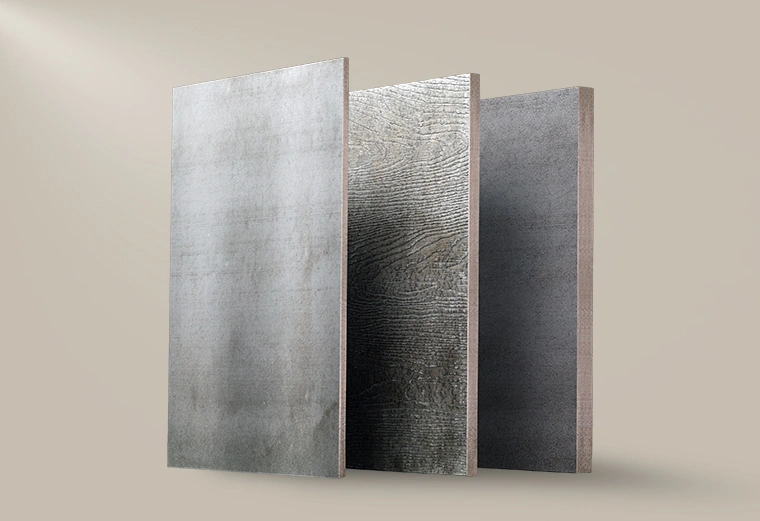
A designer board is used where both surface finish and base strength are required for the same material. It is applied to wall panelling, partitions, ceilings, furniture, and some exterior work.
In many projects, it replaces the usual method where a baseboard is installed first and then finished with laminates, polish, or coatings. Here, the board itself carries the finish.
What Is a Designer Board in Practical Use?
A Designer Board is not just about appearance. On-site, it is chosen mainly to reduce extra work.
Instead of adding layers later, the board is installed and used with minimal finishing.
You will usually see it used in the following contexts:
- wall panels
- ceiling boards
- partition sections
- cabinet structures
In most cases, the reason is simple. It cuts down steps during installation.
Why Is It Used Instead of Multiple Materials?
Earlier, finishing required separate materials.
First, a base. Then a surface layer. Then corrections. If any step was off, it showed later. Now, many teams prefer to avoid that.
A designer board reduces the following:
- dependency on multiple materials
- time spent on finishing
- chances of uneven surfaces
At the site level, this approach makes a difference, with less rework.
Wall Panelling Applications
Wall panelling is one of the most common uses.
Not every wall stays perfectly even after plaster. Small variations are normal. Painters usually notice this first.
A board helps cover that.
Used in:
- living areas
- bedrooms
- office cabins
- reception walls
A Designer Board gives a flat base. Thereafter, the finish looks more consistent.
Ceiling Work and Alignment
Ceiling work needs proper alignment.
Once lighting is fixed, any unevenness becomes visible.
Boards are used here to:
- cover wiring
- support fixtures
- maintain level
In commercial spaces, ceilings are opened and closed multiple times for maintenance. The board used should not weaken or shift easily.
Partition Use on Site
In offices and shops, partitions are now often built without full masonry.
Boards are used instead.
A designer board is fixed onto a frame to create the following:
- cabins
- meeting sections
- work areas
This is faster to install. Also easier to modify later if needed.
Furniture and Daily Use Areas
Some parts of a space are used every day.
Wardrobes, cabinets, storage units.
These are not just design elements. They handle load and repeated use. If the board is not stable, it shows over time.
A Designer Board is used here because it holds better than lighter materials.
Exterior and Semi-Open Areas
In some projects, the same board is used outside as well.
For:
- balcony panels
- cladding sections
- outer walls in modular structures
Here, exposure is higher, such as heat, moisture, and dust.
What Changes After Installation?
On the first day, most finishes look fine.
The difference starts later.
After a few months:
- Some surfaces start showing lines
- Some edges need fixing
- Some panels lose alignment
A well-made designer board reduces these problems.
It stays in place. That’s the main requirement.
Why is the Bison panel used in these cases?
The Bison Panel is made using cement and wood particles.
Because of its composition, it feels solid but can still be handled on site without much difficulty.
It is used in:
- wall panelling
- ceilings
- partitions
- furniture
- exterior sections
The advantage is not just finishing. The board itself carries strength.
Comparison With Regular Materials
Often, this board replaces common options.
- Plywood is easy to cut, but it may bend or attract termites
- MDF gives a smooth finish but reacts to moisture
- Gypsum boards work indoors but are not very strong
A designer board is used when these limitations become problematic.
Before Selecting a Designer Board
A few basic things are usually checked:
- where it will be used
- whether it will face moisture
- whether it needs to carry a load
- How much finishing is required
These points affect how the board performs later.
Why Is Its Use Increasing?
Construction timelines are shorter now. There is less space for repeated corrections.
Teams prefer materials that work in one go. A Designer Board fits into that requirement. It reduces steps. That’s the main reason.
Conclusion
A Designer Board is used across interior and exterior applications where a stable surface and reduced finishing work are required.
It supports wall panelling, partitions, ceilings, and furniture without depending on multiple additional layers.
Bison Panel is used in such projects where the same board needs to perform across different areas without frequent maintenance.
FAQs:
Does it need extra finishing after installation?
Not always. In several cases, the surface is already adequate to use. Some projects still apply a finish, but the board itself has already completed the main work.
What about moisture areas like kitchens?
It can be used there, but the moisture level is usually checked before finalising the conditions, which differ from site to site, so the decision is taken based on where exactly it’s going.
Is it strong enough for furniture?
Yes, it is used in cabinets and storage units. These areas go through daily use, so the board needs to hold up. That’s why selection matters here.
How is it different from plywood or MDF?
Plywood is easier to handle but can have issues over time. MDF gives a smooth finish but doesn’t react well to moisture. A Designer Board is usually chosen when these become a concern.
Could you please clarify if it effectively reduces on-site work?
In most cases, yes. Since fewer layers are involved, there’s less back-and-forth during finishing. That’s where time gets saved.