
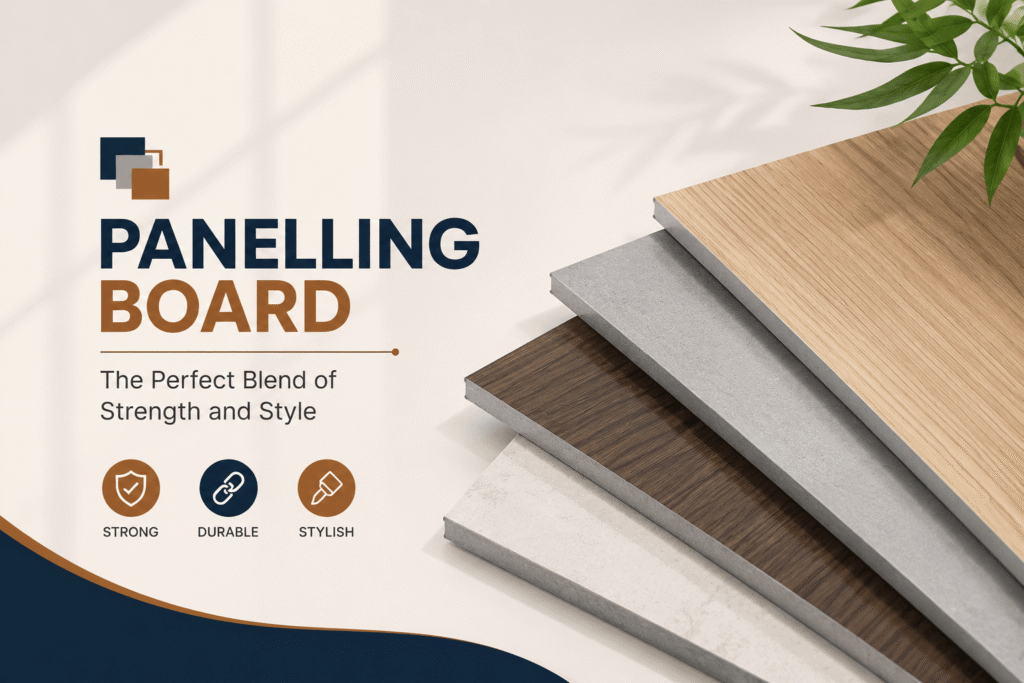
Panelling Board: The Perfect Blend of Strength and Style
Home » Panelling Board: The Perfect Blend of Strength and Style
A building has two lives.
The first begins on the day it is completed. Fresh paint, polished surfaces, carefully placed lighting, and the excitement of seeing months of planning finally come together.
The second begins much later.
It starts when the building is no longer new. When people use the space every day, the building begins to show its age. When people move furniture, walls face constant interaction, and changing weather quietly tests the materials chosen years earlier.
That is usually when the real conversation begins.
Architects may talk about design. Contractors may talk about execution. Building owners often end up talking about maintenance. Somewhere between those conversations lies a simple truth: the materials chosen during construction influence how a space ages.
At NCL Industries, we have seen this reality across different types of projects. Design trends evolve, colour palettes change, and interior styles come and go. Yet the expectation remains the same. People want spaces that continue to perform well long after they hand over the project.
This expectation is one reason the panelling board has become so modern in its interiors. Not because it follows a design trend, but because it helps address a challenge that never goes out of style, creating spaces that balance with long-term performance.
Why Are Panelling Boards a Popular Choice for Modern Interiors?
Talk to three different architects, and you will likely find that each has a different design style. Yet many of them are solving the same problem. How to make a space feel complete without filling it with unnecessary elements.
Walls have become part of that solution.
A plain painted wall still works, but it does not always create the same visual impact. This is why panelling has become a familiar sight in offices, hotels, cafés, retail stores, and homes. It gives designers another way to add interest to a space without relying on bold colours or excessive decor.
What makes the difference is not always obvious. A reception area feels more refined. A living room feels warmer. A workspace feels less plain and more intentional. Most people notice the result before they notice the material itself.
That growing preference for layered, well-finished interiors is one reason the Panelling Board continues to find its place in modern design projects.
Combining Durability with Aesthetic Appeal
Not long ago, a builder shared an interesting observation with us. He said clients rarely call him to praise a wall after he has completed a project. They call when a surface starts showing problems earlier than expected.
There is some truth in that.
A wall may look impressive on the day of handover, but its real value becomes clear much later. It could be a busy office where people brush past the same surfaces every day, a café that welcomes hundreds of visitors each week, or a family home that sees years of everyday activity. These spaces rely on materials that exist in real life.
This is why many designers use interior and decorative wall panels to bring texture and character to a space while also considering long-term performance. A panelling board appeals to more than just looks. That balance is what makes it one of the most preferred modern interior solutions today.
Waterproofing Particle Boards for Long-Lasting Performance
Most building owners do not think about moisture until something goes wrong.
A patch appears on a wall. An edge starts losing its shape. A surface that once looked perfect no longer does. By then, the damage has usually been developing for months, sometimes even years.
That is what makes moisture so difficult to deal with. It rarely arrives as a major problem. More often, it shows up through small changes that are easy to ignore at first.
People involved in construction understand this reality well. They know that a material is not judged only by how it looks when installed. It is judged by how it performs after several summers, monsoons, and years of everyday use.
This growing focus on long-term performance is one reason many projects now consider a waterproof particle board. At NCL Industries, we have seen that regardless of location or building type, the expectation remains unchanged: materials should continue doing their job long after the project is complete.
Protection Against Moisture and Everyday Wear
One thing people learn after spending enough time around construction projects is that buildings age differently.
Two spaces may look almost identical when they are completed. Visit them again a few years later, and the difference can be surprising. One still looks well-maintained. The other has already started asking for attention.
Much of that is due to material choices.
Moisture, daily use, shifting furniture, and routine cleaning – none of these seems like major issues in isolation. Yet they quietly test every surface inside a building. That is why many architects and contractors prefer a waterproofing particle board when durability is required.
The same thinking often leads them towards a cement-bonded particle board, especially in projects where reliability matters. A dependable waterproof building board and other moisture-resistant boards are usually selected for the same reason. Nobody notices them on opening day, but years later, their contribution becomes much easier to see.
Enhancing Spaces with Decorative Ceiling Panels
For years, ceilings were treated as background elements.
As long as they looked neat and functional, few people paid much attention to them.
That approach has changed significantly.
Today, ceilings are often viewed as opportunities rather than necessities.
Designers have realised that ceilings influence how people experience spaces. They affect visual balance. They help shape the atmosphere. They contribute to the overall identity of a room.
Spend a few minutes in a contemporary hotel lobby and look up.
In fact, the ceiling does far more work than people realise.
The same is for modern offices, retail environments, educational institutions, and residential interiors. Ceiling design has become part of the broader conversation about user experience.
This growing focus explains the popularity of decorative ceiling panels across a wide range of projects.
Creative Ceiling Designs for Homes and Commercial Projects
Some design features attract attention immediately.
Others work more subtly.
Ceilings often fall into the second category.
A visitor may describe a room as spacious without identifying exactly why. Someone might feel comfortable in a space without noticing the details that contribute to that experience.
Ceiling design is often responsible for part of that reaction.
This is why decorative ceiling panels continue to be explored in creative ways. They allow designers to introduce texture, rhythm, and visual interest without overwhelming the overall design.
Many projects also incorporate ceiling design panels to strengthen relationships between walls, lighting, and architectural features. When these elements work together, interiors tend to feel more cohesive.
Of course, appearance alone is not enough.
Materials installed overhead must continue performing throughout the life of the building.
This is where a durable panelling board becomes particularly valuable. It supports creative design ambitions while helping ensure long-term reliability.
Because ultimately, a ceiling is judged the same way as any other surface.
It is judged not only by how it looks when new, but also by how well it performs years later.
Conclusion
Buildings rarely reveal the quality of their materials immediately. Time does that. Daily use does that. Changing environmental conditions do that. The surfaces that continue performing year after year often become the most valuable parts of a project, even if they were never the most noticeable.
A thoughtfully selected panelling board contributes to more than design. It supports durability, reduces maintenance and allows spaces to retain their character over time. At NCL Industries, that long-term perspective continues to guide how we think about building materials and the spaces they help shape.
FAQs
1. Do panelling boards work only on walls?
No. You’ll see them in more places than most people realise, including ceilings, partitions, and furniture panels. Designers use them wherever they fit the overall look and purpose.
2. Why are so many modern projects using panelling today?
Because plain surfaces can sometimes feel flat, they can make a room feel less inviting. A little texture or detail can entirely change how a room feels without making it look overdone.
3. Is moisture something to worry about when choosing boards?
From a builder’s perspective, yes. Most moisture-related issues don’t appear immediately, which is why material selection becomes important right at the planning stage.
4. Why are ceilings getting so much attention these days?
Designers have realised that ceilings can influence how a room feels. A thoughtfully designed ceiling can entirely change the mood of a space.
5. What makes durability important?
Most materials look good when they are new. The real test is how they perform after years of everyday use.