
Building Boards That Actually Hold Up Over Time
Home » Building Boards That Actually Hold Up Over Time
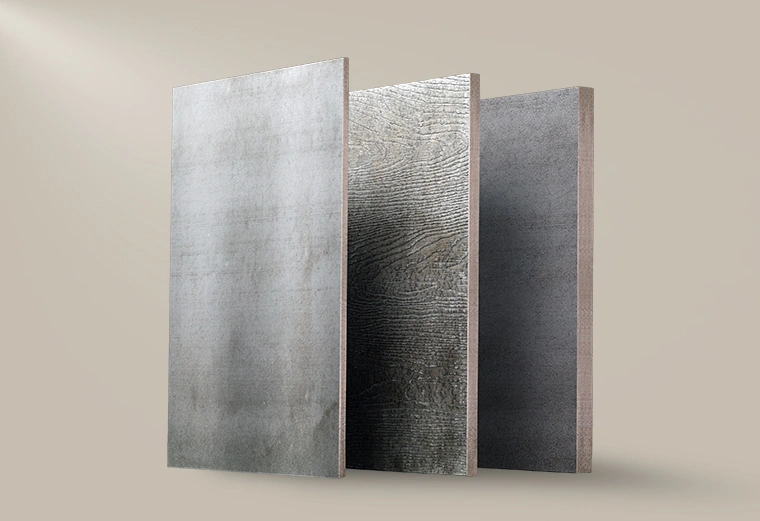
Building boards are used across construction wherever flat, stable surfaces are required. They are applied to walls, ceilings, partitions, and structural support systems in both residential and commercial projects.
On most sites, boards are selected quickly. A sheet is picked and fixed, and work moves ahead. But once the project is finished, the board’s behaviour will be noticed.
Some surfaces stay stable. Some start showing issues. That difference usually comes down to the board used at the start.
What Is a Building Board in Practical Terms?
A building board is used to create finished surfaces and support structures within a building.
You will typically find it in:
- interior walls
- ceilings
- partitions
- furniture bases
It replaces traditional materials in many areas where speed, finish, and consistency are required.
However, not all boards behave the same way.
- Some do not handle moisture well.
- Some chip during installation.
- Some lose strength over time.
That is where boards like Bison Panel are used. They are not limited to one application and are selected in projects where the same material is expected to perform across different conditions.
What Is It Made of and Why Does It Matter?
At a basic level, the composition of a board decides how it behaves later.
Bison Panel uses:
- cement
- wood particles
- binding fibre
This combination is not very common in standard boards.
Cement provides strength. Wood allows it to be worked on-site.
In most cases, you either get a board that is easy to cut but weak later or one that is strong but difficult to handle.
Here, both aspects are balanced. It can be cut, drilled, and fixed without much difficulty, but once installed, it holds its form.
What Actually Shows in Real Use?
Instead of looking at features, it helps to look at what happens after installation.
A good building board should not start creating issues within a short time.
Bison Panel typically exhibits the following characteristics:
- It stays in shape: Once fixed, the board does not bend or weaken easily. This characteristic becomes noticeable in high-use areas.
- Handles moisture better: In damp conditions, many boards start swelling or breaking down. A cement-based board performs differently.
- Not affected by termites: Since cement forms a major part of it, pest damage is not a common issue.
- Fire resistance: Compared to regular boards, this material provides better resistance, which is relevant in both homes and commercial spaces.
- Sound control: In offices or shared spaces, you can notice a difference in noise levels.
These are not additional features. They are basic performance expectations for long-term use.
Where are building boards used in construction?
A building board usually covers multiple areas.
In most projects, it is used across multiple applications.
- Inside the building: Used in partitions, ceilings, and backing structures. It provides a stable surface for finishing.
- Outside the building: Used in cladding and facade work where exposure to weather is higher.
- Structural use: In some cases, it is used in flooring systems or prefab construction setups.
Using the same board across different areas helps maintain consistency during execution.
Why Do Builders Prefer Using One Reliable Board?
Material selection on-site is usually practical.
Builders tend to stick with materials that reduce problems later.
A reliable building board helps with:
- fewer post-completion complaints
- reduced maintenance work
- consistent results across different areas
Over time, these factors matter more than small cost differences.
Ease of Use on Site
Installation plays a major role in material selection.
If a board is difficult to cut or fix, labour time increases. If it breaks during installation, it slows down the work.
A balanced board works differently.
It can be handled like a wood-based board during installation. After fixing, it performs more like a cement-based material. This reduces both effort and rework.
Use in Modern Construction Projects
Construction today moves faster than before.
Designs change quickly. Space is used more efficiently. Timelines are tighter.
Using a single building board across applications helps reduce confusion on-site.
It is commonly used in:
- compact urban homes
- office interiors
- modular structures
- prefab construction
Workers become familiar with the material, which improves speed and consistency.
What does the Bison Panel offer in comparison?
There are many boards available in the market.
Some are low-cost. Some are easy to install. Some are selected for specific uses.
The issue usually appears in consistency.
The Bison Panel is used in projects where the expectation is simple:
- same quality across sheets
- same behaviour across applications
- fewer issues during installation
It is not advertised as a specialised product for a single use. It is used as a general building solution across multiple areas.
Points to Consider Before Selecting a Building Board
Before choosing a building board, it helps to look at the following:
- where it will be used
- How much usage the area will see
- Whether moisture or heat exposure is involved
- How long is the material expected to last
Once installed, replacing boards is not simple. Therefore, selection at the initial stage matters.
Conclusion
A building board is used in multiple parts of construction, from walls and ceilings to partitions and structural elements.
The board’s performance becomes visible after the project is completed.
A reliable option doesn’t require attention after installation. It stays in place and continues to perform without creating additional work.
That is generally what is expected from a construction material used across different parts of a building.
FAQs
- Where do people usually use building boards?
Typically, people use building boards for walls and ceilings. On some sites, the same board is used for partitions.
- Are they only meant for indoor work?
No, they are used inside and, in many cases, are also applied outside for cladding work.
- What happens if there is moisture?
Depends on the board. Cement-based ones generally don’t become affected as quickly as others.
- Do they stay strong after installation?
A good board does. It should hold its shape even after regular use.
- Are they common in newer projects?
Yes, you’ll see them in offices, smaller homes, and prefab structures where work needs to move fast.